
Deep Q-Network in Practice: A TensorFlow-Based Four-Layer Neural Network Snake Agent
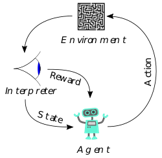
This project applies Deep Reinforcement Learning to the classic Snake game. To enable the Agent to make optimal decisions in a dynamic environment, I designed a custom four-layer fully connected network using the TensorFlow framework as the core Q-Network.
By designing an 11-dimensional environment feature vector as input and combining it with Bellman Equation for Q-value iterative updates, the model successfully learned obstacle avoidance, path planning, and long-term survival strategies. This project demonstrates the complete AI development process from environment setup, model architecture design, to reward function optimization.
🛑 Motivation & Challenge
In reinforcement learning, designing a network architecture that is “deep enough but not overfitting” to handle the state space is the key to success.
- State Feature Extraction: Snake’s decisions depend on relative positions (Where is the food? Is there danger nearby?) rather than absolute coordinates.
- Sparse Reward: The snake only receives positive feedback when eating food; the rest of the time it’s just moving. If the network architecture is too simple, it’s difficult to capture the relationship between “movement” and “future rewards”; if too complex, training convergence is too slow.
🛠️ Technical Deep Dive
1. State Representation
To reduce input dimensions and accelerate convergence, I abandoned raw image input (CNN) and instead adopted feature engineering, condensing the current situation into an 11-dimensional Boolean Vector $S_t$:
[Image placeholder: Recommend inserting a diagram showing the 11 sensor value definitions around the snake head]
- Danger Perception (3): [Danger ahead, Danger to the right, Danger to the left]
- Movement Direction (4): [Left, Right, Up, Down] (One-hot encoding)
- Food Direction (4): [Food to the left, Food to the right, Food above, Food below]
2. Model Architecture Design
This is the core of the project. To capture nonlinear relationships between state features (e.g., “food is to the left” AND “danger on the left” $\rightarrow$ should “go up or down”), I built a four-layer Dense network using TensorFlow/Keras.
Mathematical representation:
$$f(x) = W_4 \cdot \sigma(W_3 \cdot \sigma(W_2 \cdot \sigma(W_1 \cdot x + b_1) + b_2) + b_3) + b_4$$
- Input Layer: Receives the 11-dimensional state vector.
- Hidden Layer 1 & 2 (Dense): Through two hidden layers (with ReLU activation function $\sigma$) for feature crossing and extraction, increasing the model’s expressive power to understand complex dead-end structures.
- Output Layer: Outputs 3 Q-values corresponding to expected rewards for [Go straight, Turn right, Turn left].
[Image placeholder: Recommend inserting neural network architecture diagram showing Input(11) -> Dense -> Dense -> Output(3) layer structure]
3. DQN Algorithm & Optimization
Using TensorFlow’s automatic differentiation capability, I implemented the DQN training loop:
- Prediction: Use
model.predict(state)to get Q-values for current actions. - Target Q: Calculate according to Bellman Equation: $$Q_{target} = R + \gamma \cdot \max(Q_{next_state})$$
- Training: Use
model.fit()to minimize the loss function, using Mean Squared Error (MSE) to make predictions approach target values.
4. Reward Shaping
To guide the snake to learn more efficiently, I designed a refined reward mechanism:
- Survival & Eating: Food eaten $+10$, Death $-10$.
- Guidance Strategy: If an action shortens the distance between snake head and food, give a small reward; if it increases the distance, give a small penalty. This solved the problem of the snake spinning in place during early training.
- Time Penalty: Deduct $-0.1$ per step, forcing the model to find the shortest path.
📊 Results & Reflection
After multiple training iterations (Epochs), the Agent’s behavioral evolution was observed:
- Random Phase: Model hasn’t converged yet, snake frequently hits walls.
- Obstacle Avoidance Phase: Hidden layers learned to recognize “danger features,” snake can survive for long periods but circles the field.
- Goal-Oriented: The four-layer architecture successfully integrated “food direction” with “path planning,” snake exhibits clear hunting behavior.
Conclusion
By implementing this custom four-layer DQN model with TensorFlow, I validated the powerful capability of Deep Neural Networks (DNN) in handling decision problems. This project not only familiarized me with TensorFlow’s model construction API but also gave me a deep appreciation for the decisive impact of network depth and reward function design on reinforcement learning performance.